
Michigan's Elk Herd & Atlanta's Elk Capital Legacy
Wildlife, History & Up North Identity | Atlanta, Lewiston, Johannesburg & Northern Michigan
In northeast Northern Michigan, elk are more than a wildlife success story — they are a living symbol of habitat restoration, careful stewardship, and deep community identity. After disappearing from Michigan's landscape entirely around 1875, the state's free-ranging elk herd began with a remarkable 1918 release of just seven animals near Wolverine and has since grown into one of the most celebrated wildlife populations east of the Mississippi.
Today, with the Michigan DNR estimating roughly 1,150 elk statewide, the herd centers on the Pigeon River Country area — right in the backyard of communities like Atlanta, Lewiston, and Johannesburg. Atlanta's long-standing title as the “Elk Capital of Michigan” has become inseparable from the elk's presence, shaping tourism, seasonal traditions, and the very character of life Up North.
Whether you're planning a wildlife viewing trip, dreaming of owning land in elk country, or simply curious about one of Michigan's great conservation stories, this guide covers everything you need to know.
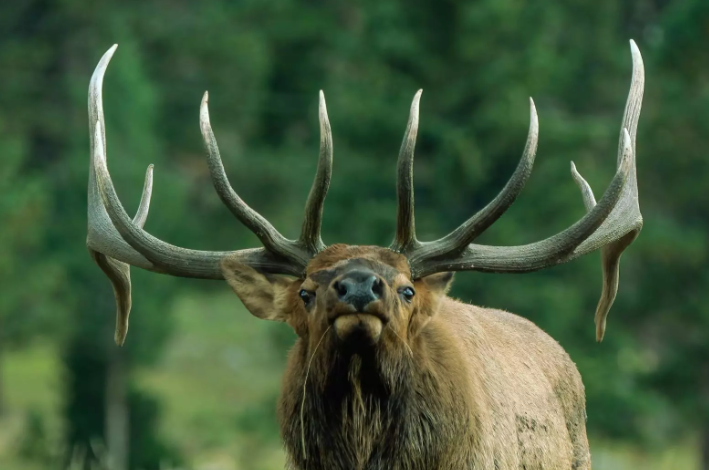
From Extirpation to Comeback: The Michigan Elk Story
Elk were once common across Michigan's Lower Peninsula. Before European settlement reshaped the landscape, these large animals roamed widely through the forests and openings of the north. But by approximately 1875, Michigan's elk were gone — wiped out by a combination of unregulated market hunting and sweeping habitat change driven by large-scale logging and land conversion.
The story didn't end there. In 1918, seven elk were released approximately three miles southeast of Wolverine, in what is now the heart of Northern Michigan's elk country. Those seven animals are the ancestors of every wild elk in Michigan today.
A Timeline of Key Milestones
- Pre-1800s — Elk present and widespread across the Lower Peninsula
- 1875 — Elk extirpated from Michigan due to unregulated harvest and habitat loss
- 1918 — Seven elk released near Wolverine; Michigan's modern herd begins
- 1919–1928 — Pigeon River Country State Forest established and expanded
- Early 1960s — Herd peaks at an estimated 1,500 animals
- Mid-1970s — Population falls sharply to around 200 elk
- 1984 — Annual regulated elk hunting resumes; modern management structure takes shape
- 1986 — Atlanta officially designated “Elk Capital of Michigan” by the Michigan Legislature
- 2026 — DNR estimates approximately 1,150 elk statewide
The herd's recovery was not a straight line. It peaked dramatically in the early 1960s, then crashed to just ~200 animals by the mid-1970s before rebounding under decades of careful habitat management, regulated hunting, and dedicated conservation work in and around Pigeon River Country.
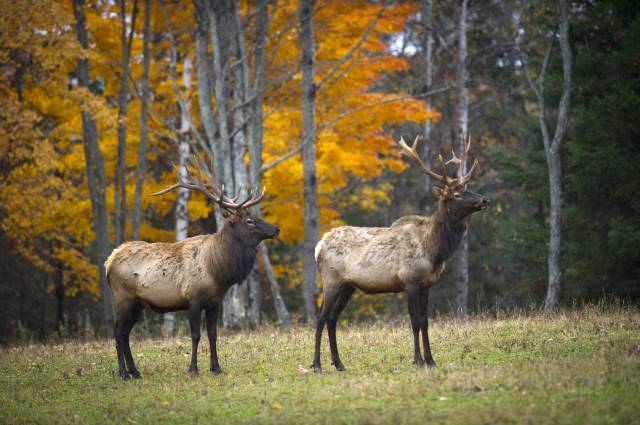
How Many Elk Are in Michigan? Population & Range Today
Michigan's elk herd is a genuinely dynamic population — and tracking it accurately is more challenging than it might seem. The DNR relies on fixed-wing aerial surveys corrected with statistical models, and began piloting large-scale trail-camera methods in 2025 to improve precision and reduce weather dependency.
The herd is centered in the Pigeon River Country State Forest — considered the nucleus of Michigan's elk range — and primarily occupies Cheboygan, Montmorency, and Otsego counties. That puts the heart of elk country right in the corridor connecting Atlanta, Lewiston, Vanderbilt, and Johannesburg in Northern Michigan.
The DNR's management goal keeps the herd in balance with available habitat, typically targeting 500–900 elk. Survey estimates in recent years have ranged from a low around 870 to a high around 1,684, reflecting the real statistical uncertainty of counting animals across hundreds of square miles of forested terrain. Precision matters: with a relatively narrow management target, knowing whether the herd is truly above or below goal is critical for responsible decision-making.
Seasonal Movement & Viewing Windows
Elk aren't stationary — their movements follow seasonal rhythms tied to food availability, breeding behavior, and weather. For wildlife watchers and visitors to the Atlanta and Lewiston area, there are two prime viewing windows each year:
- September – Early October (The Rut): Bulls bugle, spar, and compete for cows. Elk feed actively in open grassy areas during dawn and dusk. This is peak viewing season and when Atlanta's annual Elk Festival takes place.
- Late April – Mid-May (Spring Green-Up): Elk are drawn into the open by fresh new growth and tend to be active during daylight hours, offering excellent viewing opportunities before summer foliage fills in.
The DNR and its partners manage food plots throughout Pigeon River Country — planted with rye, clover, alfalfa, and buckwheat — specifically to concentrate elk in viewable areas during these windows.
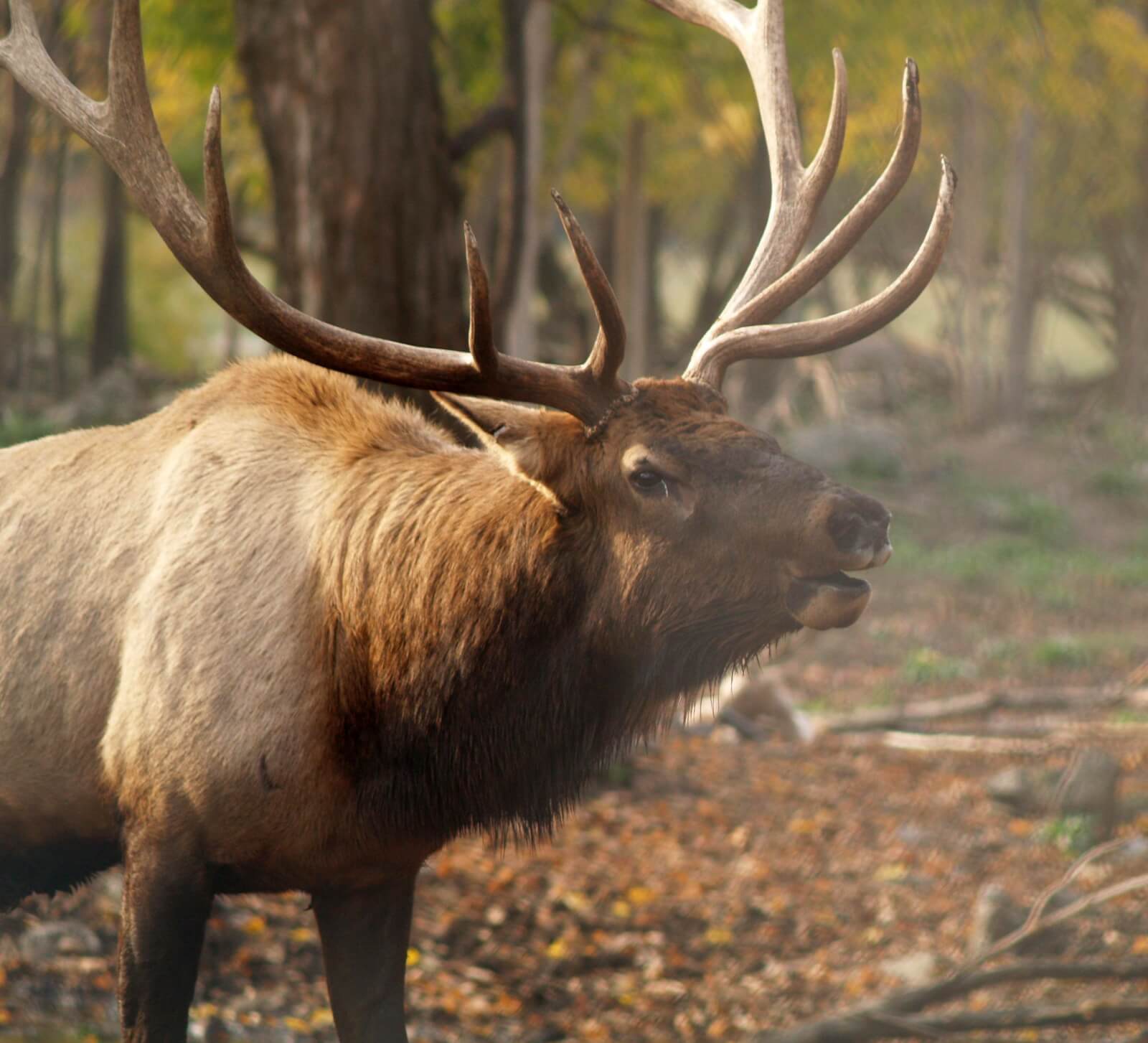
Each fall, thousands of visitors make their way Up North to experience the sights and sounds of the rut — bulls bugling at dawn, massive antlers catching the early light. For anyone who's witnessed it, it's an experience that defines Northern Michigan.
Atlanta, Michigan: The Elk Capital of the North
Atlanta sits at the center of Michigan's elk range in Montmorency County, and its identity is deeply intertwined with the elk that roam the surrounding forests and openings. In 1986, the Michigan Legislature officially designated Atlanta as the “Elk Capital of Michigan” — a title the community has embraced and built upon ever since.
For residents and visitors alike, elk aren't an abstract wildlife statistic — they're a visible, daily presence. Drive the back roads around Atlanta, Lewiston, or Johannesburg on an autumn morning and you're genuinely likely to encounter a bull elk, a cow with calf, or an entire herd feeding in a roadside opening.
The Annual Elk Festival
Every year on the last full weekend of September, Atlanta hosts its beloved Elk Festival, drawing thousands of visitors from across Michigan and beyond. The festival celebrates the peak of the rut — when elk activity is at its most spectacular — and serves as a cornerstone of the local tourism economy. For many families, the Elk Festival is an annual Up North tradition as reliable as fall color or deer season.
Elk Tourism and the Local Economy
The economic value of Michigan's elk herd to Northern Michigan communities like Atlanta, Lewiston, and Johannesburg extends well beyond festival weekend. The Michigan DNR explicitly recognizes elk viewing amenities and educational opportunities as drivers of sustained tourism that supports regional businesses throughout the year.
- Wildlife viewing draws visitors in both spring and fall, extending the tourism season beyond summer
- The elk hunt — one of the most sought-after in the Midwest — brings 30,000–40,000 applicants annually for just 100–400 licenses
- Atlanta's “Elk Capital” brand identity supports lodging, dining, guiding, and outfitter businesses throughout the region
- Pigeon River Country and surrounding public lands attract hikers, campers, paddlers, and wildlife photographers year-round
How Michigan's Elk Herd Is Managed — and Why It Matters
Managing a free-ranging elk herd in a landscape shared with farms, forests, roads, and hundreds of thousands of people is no simple task. The Michigan DNR's approach balances elk conservation with habitat capacity, disease surveillance, and minimizing conflicts with agriculture and forestry.
Habitat: The Foundation of the Herd
Michigan's elk thrive in open, young forest mosaics — a mix of food plots, meadows, young aspen stands, and regenerating forest interspersed with older timber. The DNR actively manages state land in Pigeon River Country by cutting older timber to create younger forest, planting food plots, and using prescribed fire to maintain habitat elk prefer. Research suggests bulls average a home range of roughly 35 square miles, while cows average around 23 — meaning the herd's needs span a vast landscape across Cheboygan, Montmorency, and Otsego counties.
Disease Surveillance
Disease monitoring is one of the highest-priority management concerns for the herd. The DNR tests elk harvested during the annual hunt for bovine tuberculosis and checks animals killed in accidents or by illegal take when possible. Since 1996, more than 4,300 elk have been tested for bovine tuberculosis, with seven positives recorded. As of the most recent management plan, no Michigan elk had been found with Chronic Wasting Disease — though CWD has been detected in Michigan's deer population since 2015, making ongoing surveillance critical.
Hunting as a Management Tool
Michigan's regulated elk hunt, managed by the Natural Resources Commission, is the primary lever for controlling herd size and distribution. The hunt is deliberately limited — far more people apply than receive licenses — and serves a dual purpose: maintaining a herd in balance with its habitat while preventing conflicts with agriculture and roadways. The 2025 season resulted in 153 elk harvested, with season structure proposals for 2026–2027 under active consideration by the NRC.
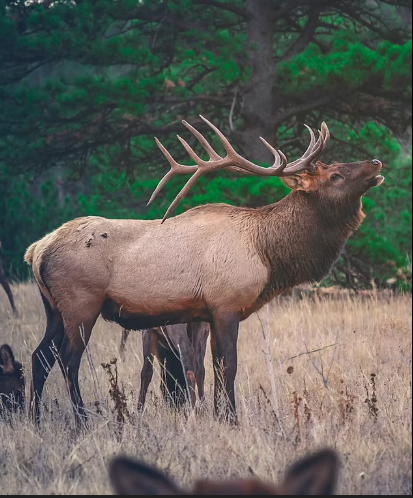
Frequently Asked Questions About Michigan's Elk Herd
Where is the best place to see elk in Northern Michigan?
The best elk viewing in Northern Michigan is centered around Pigeon River Country State Forest, located near Atlanta, Vanderbilt, and Johannesburg. The Michigan DNR manages food plots and forest openings throughout this area specifically to support elk activity. The Pigeon River Country Discovery Center near Vanderbilt is an excellent starting point, and many visitors spot elk along back roads in Montmorency, Cheboygan, and Otsego counties.
When is the best time of year to see elk in Michigan?
The two most popular windows for elk viewing in Northern Michigan are September through early October — when bulls bugle during the rut and elk feed actively in open areas — and late April through mid-May, when elk are drawn out by new green growth during daylight hours. The annual Elk Festival in Atlanta each September draws thousands of visitors looking to experience the rut firsthand.
How many elk are in Michigan right now?
As of early 2026, the Michigan DNR estimates approximately 1,150 elk statewide. The herd is concentrated in the Pigeon River Country area, primarily across Cheboygan, Montmorency, and Otsego counties in the northeastern Lower Peninsula. The DNR uses aerial surveys and is currently piloting trail-camera methods to improve population estimate accuracy.
Why is Atlanta, Michigan called the Elk Capital?
Atlanta, Michigan received its official designation as the “Elk Capital of Michigan” in 1986 through an act of the Michigan Legislature. The community sits at the heart of Michigan's elk country, surrounded by the Pigeon River Country State Forest and the primary range of the state's free-roaming elk herd. Today, Atlanta's identity is closely tied to elk tourism, anchored by the annual Elk Festival held the last full weekend of September.
Can you hunt elk in Michigan?
Yes, Michigan holds a highly regulated annual elk hunt in the northeastern Lower Peninsula. It is considered one of the most sought-after hunting experiences in the Midwest — between 30,000 and 40,000 hunters apply each year for just 100 to 400 licenses. The Michigan Natural Resources Commission sets the annual quota, and the hunt is used as the primary tool to keep the herd in balance with its habitat.
Are there properties for sale near Michigan's elk range?
Yes — and owning land near elk country is a dream for many Up North buyers. Properties in and around Atlanta, Lewiston, Johannesburg, and the broader Montmorency and Otsego county area put you right in the heart of Michigan's elk range. Huston Real Estate specializes in Northern Michigan land, cabins, and recreational properties in these communities. Call 989.786.2240 or visit NorthernCabins.com to explore current listings.
The Bottom Line
Michigan's elk herd is one of the great wildlife conservation successes in the eastern United States — a story that began with seven animals released into the Northern Michigan wilderness in 1918 and grew into a thriving population of more than a thousand animals today. The herd's home in and around Atlanta, Lewiston, and Johannesburg isn't just a wildlife management area; it's a living landscape where people come to connect with something wild and enduring.
Atlanta's identity as the Elk Capital of Michigan runs deep — through the Elk Festival each September, through the sound of a bugling bull echoing across a frost-covered opening, and through the countless families who have made elk watching an annual Up North tradition. For the communities of Northern Michigan, the elk herd is not just a tourist draw. It is part of who they are.
If you've ever dreamed of owning a piece of elk country — a cabin, a parcel of land, or a retreat in the heart of Northern Michigan's great outdoors — Huston Real Estate is here to help you find it. We know this land, these communities, and what it means to live Up North.
Ready to own your own piece of Northern Michigan's elk country near Atlanta, Lewiston, Johannesburg, or anywhere Up North?
Call us at 989.786.2240 or visit NorthernCabins.com to explore current properties in the heart of elk country.
Huston Real Estate — Your Up North Experts
:format(webp):quality(80)/u.realgeeks.media/northerncabins/youtube.png)
:format(webp):quality(80)/u.realgeeks.media/northerncabins/pinterest.png)
:format(webp):quality(80)/u.realgeeks.media/northerncabins/facebook.png)
:format(webp):quality(80)/u.realgeeks.media/northerncabins/googleplus.png)
:format(webp):quality(80)/u.realgeeks.media/northerncabins/instagram.png)
:format(webp):quality(80)/u.realgeeks.media/northerncabins/linkedin.png)